Monthly Flush:
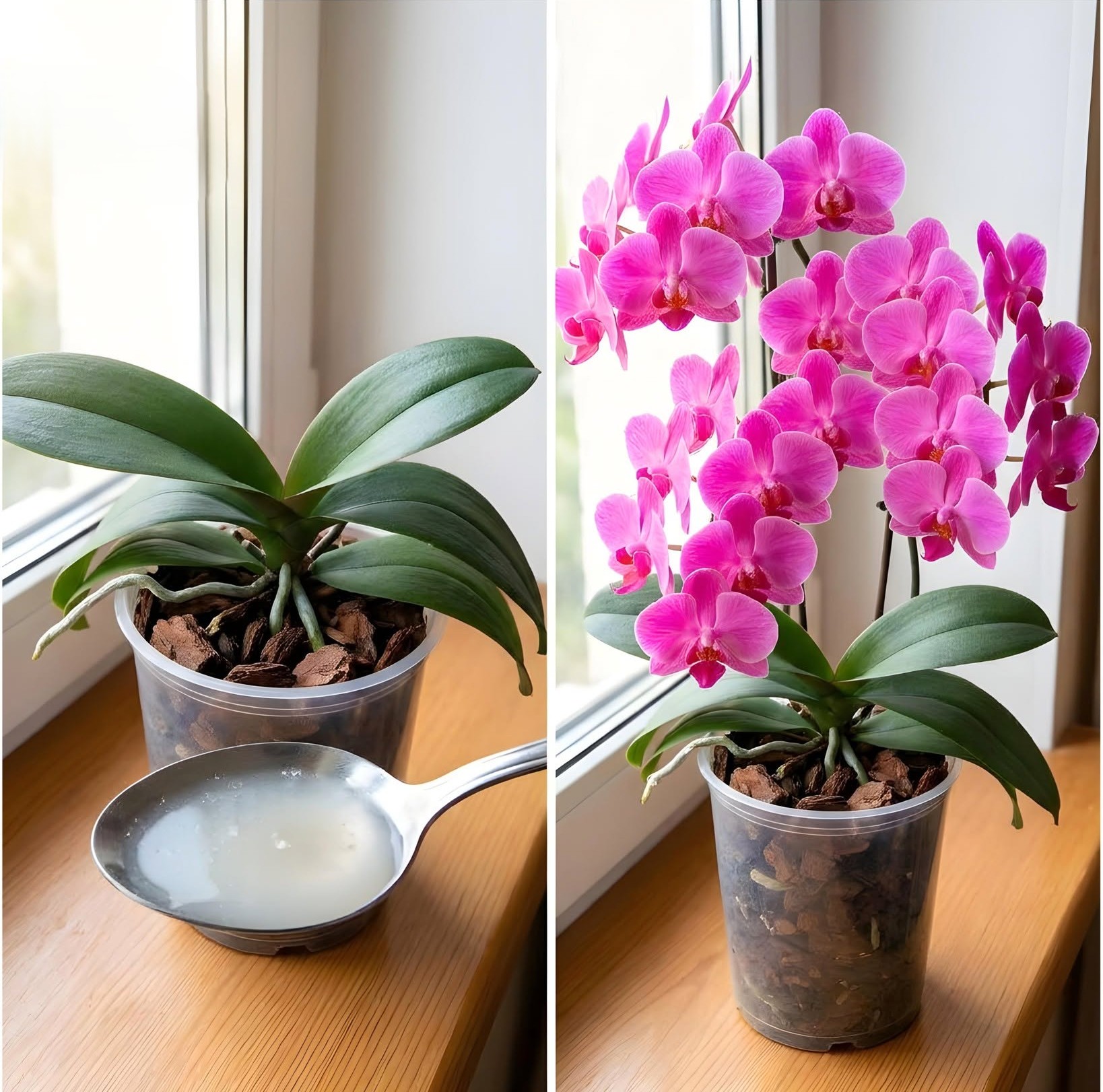
Once a month, I flush the pot with plain water to remove fertilizer salts that build up in the bark or moss. It’s not glamorous, but it makes a real difference.
Calcium and Magnesium Support:
Because many fertilizers lack calcium and magnesium, I also add a calcium-magnesium supplement once a month during these active months. This supports strong roots, healthier leaves, and flower spikes that don’t flop over halfway through blooming.
September-October:
Orchid flower spike
As days shorten and temperatures cool, orchid growth naturally slows. During this time, the plant shifts from active growth to preparing for its next bloom cycle.
Reduce Fertilizing:
I start spacing feedings out to every two to three weeks.
I keep the fertilizer diluted, just like before.
Even if a flower spike appears, I don’t increase feeding. Adding extra nitrogen at this stage encourages leaf growth rather than helping the plant finish developing its flowers.
Encourage Natural Temperature Changes:
I also focus on stability and natural temperature changes. I keep my orchid in a bright location during the day, but allow nighttime temperatures to drop slightly.
This combination of cooler nights and reduced feeding is one of the signals that helps trigger blooming. A bright window that cools off at night usually works well. The goal is consistency, not forcing growth.
November-December:
Orchid
Winter brings shorter days and slower growth, so most orchids naturally enter a resting phase. During this time, pushing growth usually leads to weak leaves and poor root health.
Minimal Feeding:
I fertilize no more than once a month.
If the orchid has stopped flowering and shows no signs of new roots or leaves, I stop fertilizing entirely.
When I first started, I made the mistake of continuing my regular fertilizing schedule through winter. Instead of helping, fertilizer salts built up in the pot, which damaged root tips and stalled growth!
Once I reduced feeding and allowed the plant to rest, overall plant health improved noticeably. This rest period helps the orchid recover and prepare for the next growth cycle.
If you’re wondering whether winter is a safe time to repot, I’ve written a separate guide that walks through when and how to repot an orchid in December without stressing the plant.
Pro Tips for Maximum Success
orchid
Understanding why this routine works makes it much easier to follow and adjust when needed. These small details can make a noticeable difference in orchid health and blooming.
Choose the Right Type of Nitrogen
Avoid fertilizers that contain urea nitrogen. Orchids can’t properly process it because they don’t grow in regular soil with the bacteria needed to break it down.
When choosing a fertilizer, look for ammoniacal or nitrate nitrogen instead. These forms are much safer and more effective for orchids.
Pay Attention to Water Quality
Watering Orchid
If your tap water is hard or heavily treated, your orchid might struggle regardless of your routine.
I like to use a bucket to collect rainwater when possible. If it isn’t raining, I simply buy a gallon of distilled water and use that on fertilizing days. The difference in leaf color and overall plant health will surprise you!
If you’re ever unsure whether your orchid is struggling or just resting, I also put together a guide covering the most common warning signs to watch for before serious damage sets in.
Learn to Read the Leaves:
Orchid plant with yellow dry leaf. Home gardening
Orchid leaves give clear signals once you know what to look for.
Dark green leaves: often point to low light or too much nitrogen.
Yellowing leaves: can be a sign of overfertilizing or a magnesium deficiency.
Reddish tones: These are usually good. They often appear when the plant is preparing to bloom.
Memorize the color codes before you enter the substrate stage.
Yellowing leaves can be especially confusing for beginners. If you want a full breakdown of the most common causes and how to fix them, I’ve written a detailed guide specifically about orchid leaves turning yellow.
Match Feeding to the Potting Medium:
Potting medium makes a bigger difference than most people realize! I really noticed this when I repotted two orchids using different mixes. One in a fresh, well-draining bark mix I prepared, and another in older potting material I already had at home.
I kept the same fertilizing routine for both, and the difference in root health and growth speed was almost immediate.
Bark-based mixes dry out quickly, so they usually need more frequent watering and feeding.
Sphagnum moss holds moisture and nutrients much longer, so I reduce fertilizing by about half for orchids growing in moss.
Quick reminder: Still, no matter the medium, I make sure roots never sit in old, salty water for long periods, as this can quickly damage them.
Consistency Matters
Orchids respond best to steady care. Paying attention to watering, keeping fertilizer light, and sticking to a routine makes a bigger difference than trying to force results.
Once I stopped changing things too often and trusted the process, my orchids became healthier and bloomed more reliably. Clean water, the right potting medium, and consistent feeding go a long way. Orchids aren’t difficult plants, but they do reward patience and observation.