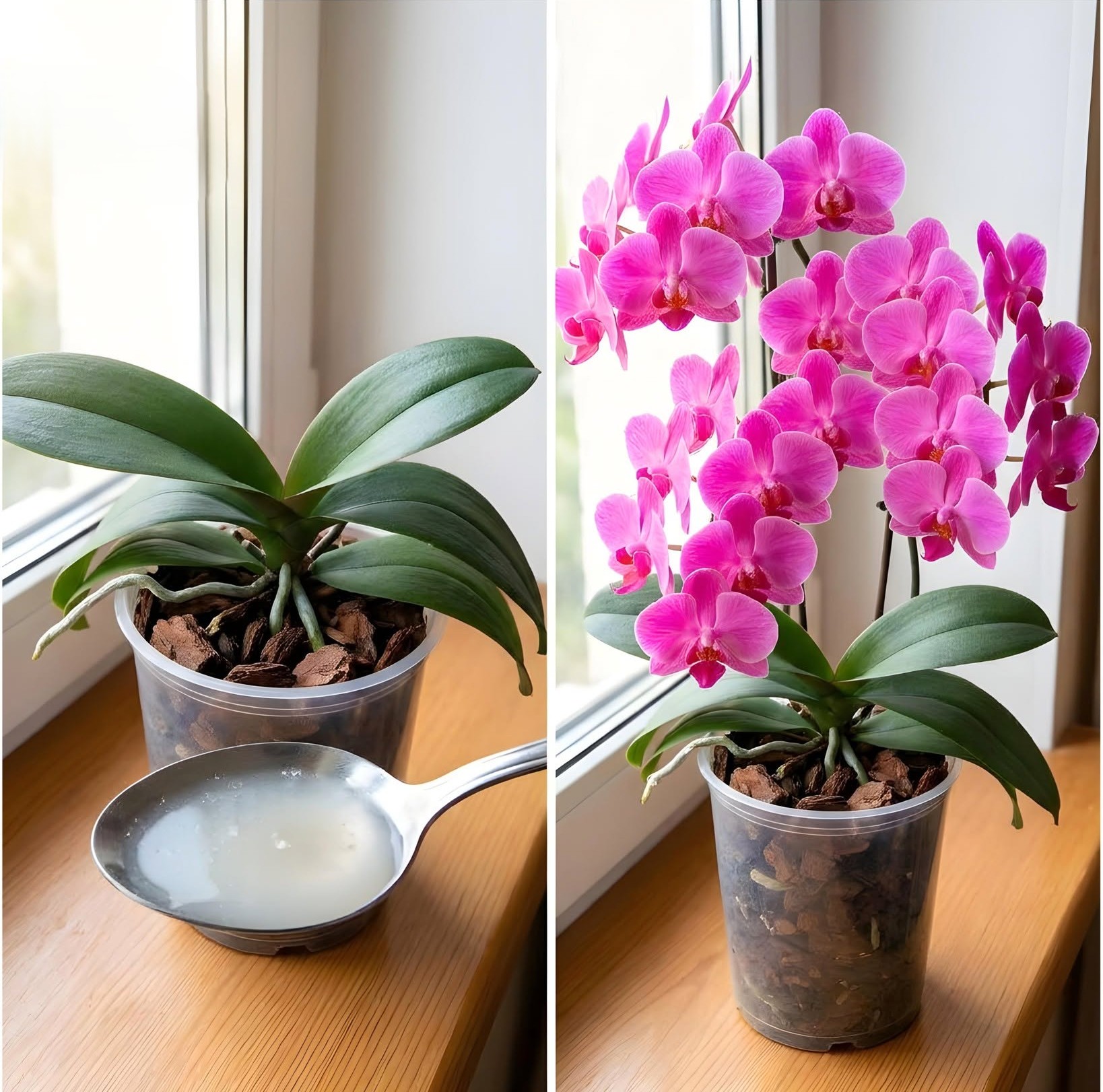
Orchids don’t bloom well by accident. Over the years, I’ve learned that consistent feeding matters far more than occasional watering or guesswork.
A quick splash of tap water isn’t enough to support healthy growth or reliable flowering. Orchids need nutrients delivered in the right way, at the right time, and in the right amounts.
What follows is the fertilizing routine I personally use for my orchids throughout the year. It’s simple and based on what has consistently worked for me, not on shortcuts or one-time fixes.
Why I Feed Orchids Lightly and Consistently
Fertilizing and watering orchid
Many houseplant care guides treat fertilizer as something you add occasionally to “boost” blooms. But from my experience, orchids do better with small, regular feedings rather than strong fertilizer used once in a while.
Because orchid roots are sensitive when dry, I always water first. I run lukewarm water through the pot until the roots turn green, let it drain fully, and only then apply a diluted fertilizer. This prevents root burn and allows the plant to absorb nutrients safely.
Orchid roots are very responsive to moisture and nutrients, which is also why they sometimes start growing outside the pot. If you’ve ever noticed that happening, I explain exactly why it occurs and what to do about it in another article I wrote on why orchid roots escape their pots and how to fix it.
My Orchid Fertilizing Routine (Month by Month)
orchid
This is the fertilizing routine I follow with my own orchids. It’s simple, repeatable, and it’s what has consistently worked for me year after year. This routine works best for common indoor orchids, especially Phalaenopsis!
January-February:
Orchids winter window
Light levels are low in winter, but many Phalaenopsis orchids are still in bloom during this time. Even though the plant is flowering, its growth slows down, so feeding needs to stay light.
I use a balanced fertilizer, such as 20-20-20, diluted to quarter strength. If the label calls for one tablespoon per gallon of water, I use about three-quarters of a teaspoon instead. If I’m using a 10-10-10 fertilizer, I simply cut the recommended dose in half.
During these months, I fertilize every two to three weeks. This is enough to support existing blooms without pushing new growth that the weak winter light can’t sustain.
March-August:
Orchid aerial root
Spring and summer are when orchids actively grow new leaves, roots, and flower spikes. During this period, I fertilize more regularly, but I keep the dose light.
How I Fertilize During Active Growth:
I follow a simple “weakly, weekly” approach.
I dilute my fertilizer to quarter strength.
I fertilize once a week when I water.
I skip feeding if the potting mix still feels wet to the touch.
When I first started, I made the common beginner mistake of thinking more fertilizer would lead to more blooms. Instead, I ended up with soft leaves and weak spikes! Switching to lighter, consistent feeding made a noticeable difference in bloom quality and spike strength.
Continue Reading 👇 Next Page