Pruning for Propagation
Spider plants are among the easiest houseplants to propagate.
Their baby plants often develop small roots while still attached to the mother plant.
How to Propagate Spiderettes
Select a healthy spiderette with visible root growth.
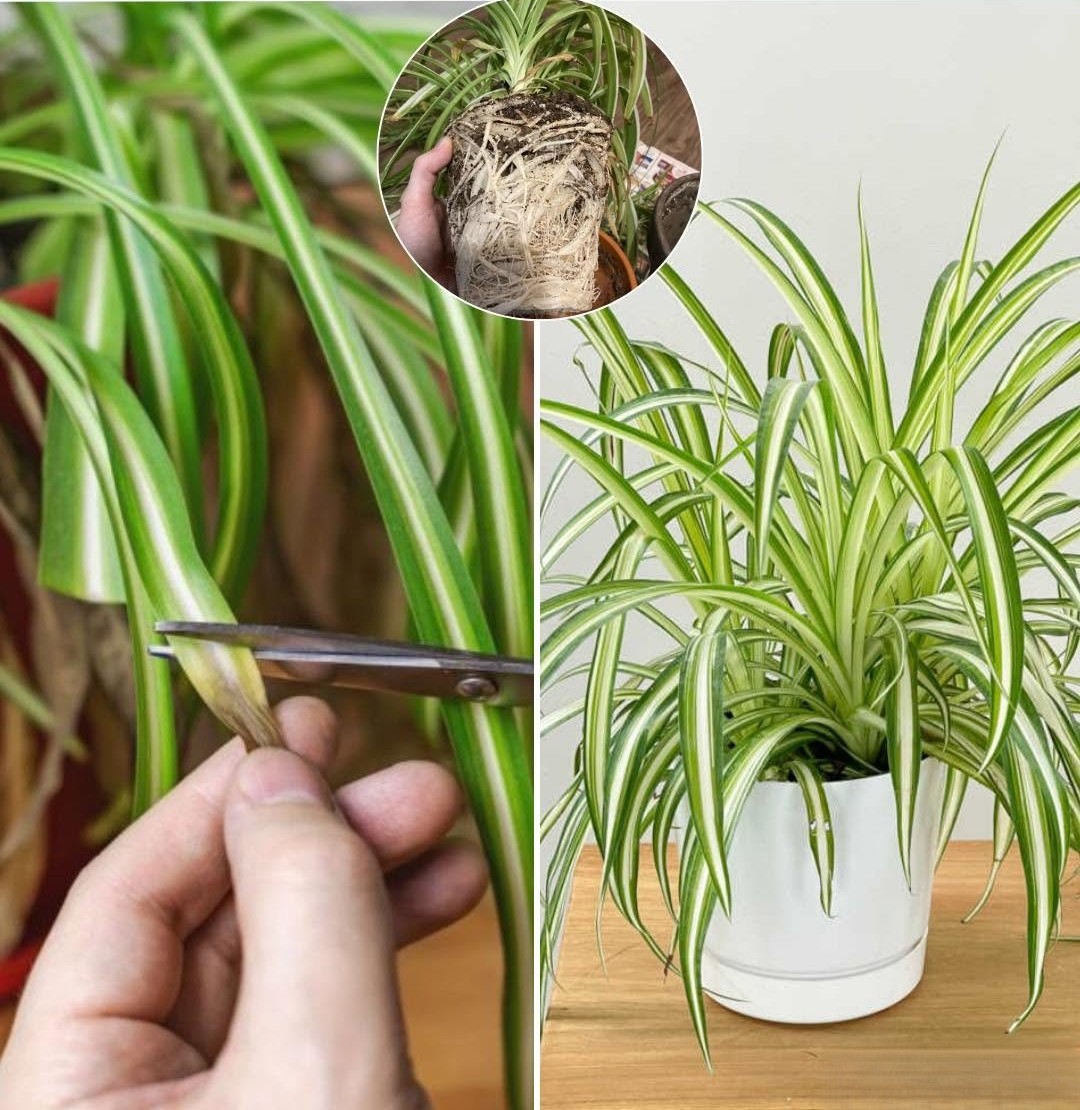
Use sterilized scissors to cut the runner approximately one inch from the baby plant.
Place the spiderette into water or directly into moist potting soil.
Provide bright, indirect light.
Keep the growing medium lightly moist until roots establish.
Once rooted, transplant it into its own container.
How Often Should Spider Plants Be Pruned?
Light Maintenance
Every two to three months to remove damaged tips and aging leaves.
Moderate Pruning
Once each spring or early summer to shape the plant and stimulate new growth.
Major Rejuvenation
Once or twice per year if the plant has become excessively large or overcrowded.
Common Pruning Mistakes
Removing Too Much Foliage
Over-pruning can stress the plant and slow recovery.
Never remove more than one-third of the plant at a time.
Using Dull or Dirty Tools
Dull blades can tear leaves rather than making clean cuts.
Dirty tools may introduce bacteria or fungi.
Cutting Healthy Central Growth
The newest leaves emerge from the center.
Focus primarily on older outer foliage unless size reduction is necessary.
Ignoring the Cause of Brown Tips
Pruning improves appearance, but recurring browning may indicate issues such as:
Low humidity.
Inconsistent watering.
Mineral buildup from tap water.
Excess fertilizer.
Supporting Recovery After Pruning
Proper care after pruning helps the plant rebound quickly.
Water Carefully
Water when the top inch of soil feels dry.
Avoid keeping the soil constantly wet.
Provide Bright Indirect Light
Spider plants grow best in bright but filtered light.
Direct midday sun may scorch leaves.
Feed During Active Growth
A balanced liquid fertilizer applied monthly during spring and summer can support healthy regrowth.
Repot If Necessary
Spider plants often become root-bound.
If roots are circling heavily around the pot, consider moving the plant into a slightly larger container.
Final Thoughts
Pruning is one of the easiest ways to keep a spider plant healthy, attractive, and productive. By removing damaged leaves, controlling excessive growth, and managing spiderettes, you encourage the plant to focus its energy where it matters most.
June provides ideal conditions for pruning because the plant is actively growing and can recover quickly. With just a few careful cuts and proper aftercare, your spider plant can become fuller, greener, and more vibrant throughout the growing season.
Whether your goal is a tidier appearance, stronger growth, or more baby plants to share with friends and family, regular pruning remains one of the most effective maintenance practices for this beloved houseplant.