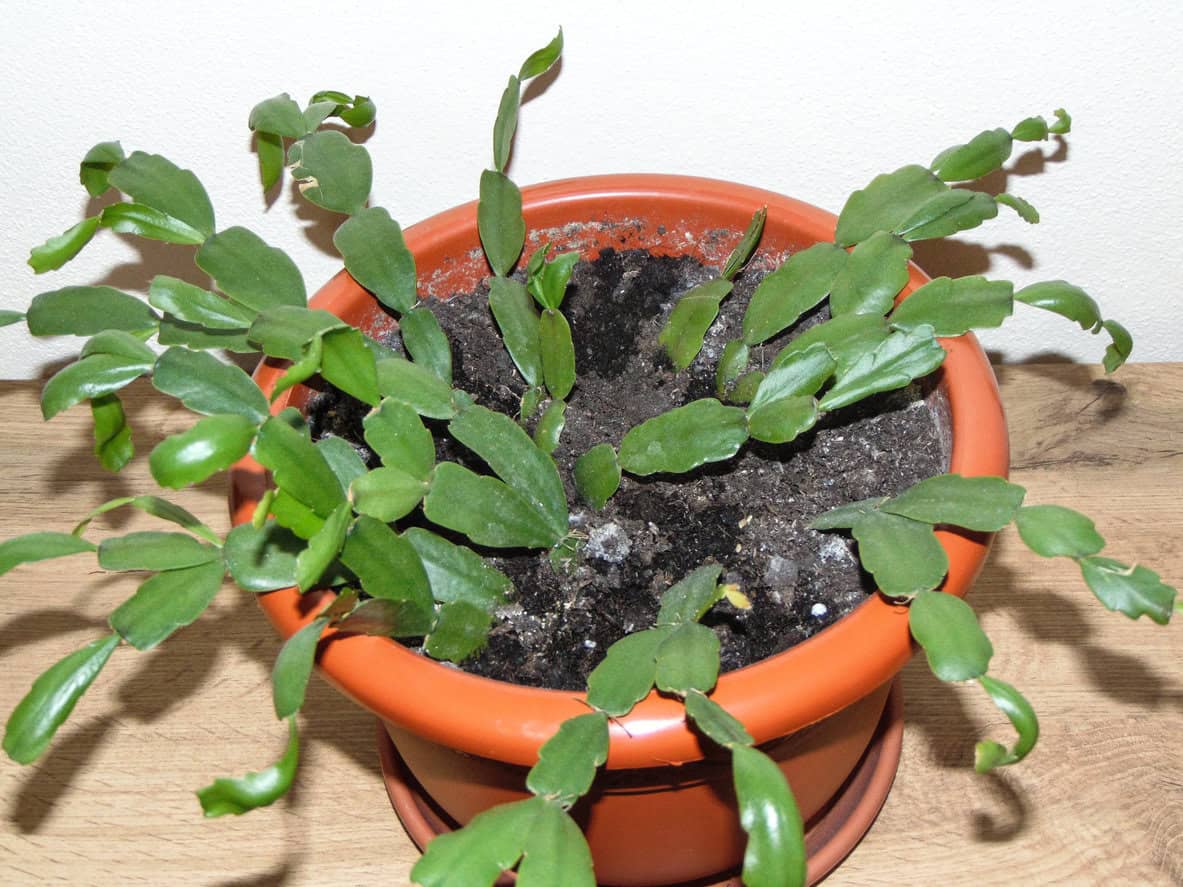
Reason 3: The Heat Wave Hindrance (Temperature)
Christmas cacti require cooler temperatures to begin producing flower buds. If your home stays warm throughout the fall, the plant may continue growing without ever initiating its bloom cycle.
Night temperatures between 50°F and 55°F (10°C to 13°C) for several weeks can help trigger bud formation.
Once buds begin to appear, avoid sudden temperature changes. Drafts, heating vents, and abrupt shifts can cause buds to fall off before flowering.
Reason 4: The Nitrogen Nuisance (Fertilizing)
Fertilizer can support healthy growth, but too much nitrogen encourages leafy growth at the expense of flowers.
If your cactus has plenty of green segments but no blooms, excessive nitrogen may be the culprit.
During the active growing season, use a balanced fertilizer at a diluted strength. As late summer approaches, some growers switch to a fertilizer with a higher phosphorus content to support flowering.
Once fall arrives and buds begin forming, stop fertilizing until blooming has finished.
Reason 5: The Root-Bound Rent Crisis (Potting Media)
Christmas cacti generally enjoy being slightly root-bound, but extremely crowded roots or old, compacted soil can limit plant health and flowering.
Over time, potting mixes break down, reducing drainage and airflow around the roots.
If your plant has not been repotted in several years, consider checking the root system after the blooming season ends.
Use a well-draining mix that contains ingredients such as orchid bark, perlite, or coarse organic matter. Avoid oversized pots, as excess soil can remain wet for too long.
Reason 6: The Seasonal Identity Crisis (Timing)
Not every holiday cactus is actually a Christmas cactus.
Many plants sold during the holiday season are Thanksgiving cacti, which bloom earlier and have pointed, claw-like segments. Christmas cacti have smoother, rounded segments, while Easter cacti bloom later in the year and have a different flower shape.
If your plant blooms at an unexpected time, it may simply belong to a different species.
In addition, newly purchased plants are often forced into bloom by commercial growers. After their first season, they may require a full year of proper care before settling into a natural blooming schedule.
Even when all the major requirements are met, one final issue can sabotage the entire blooming process right before the flowers appear.