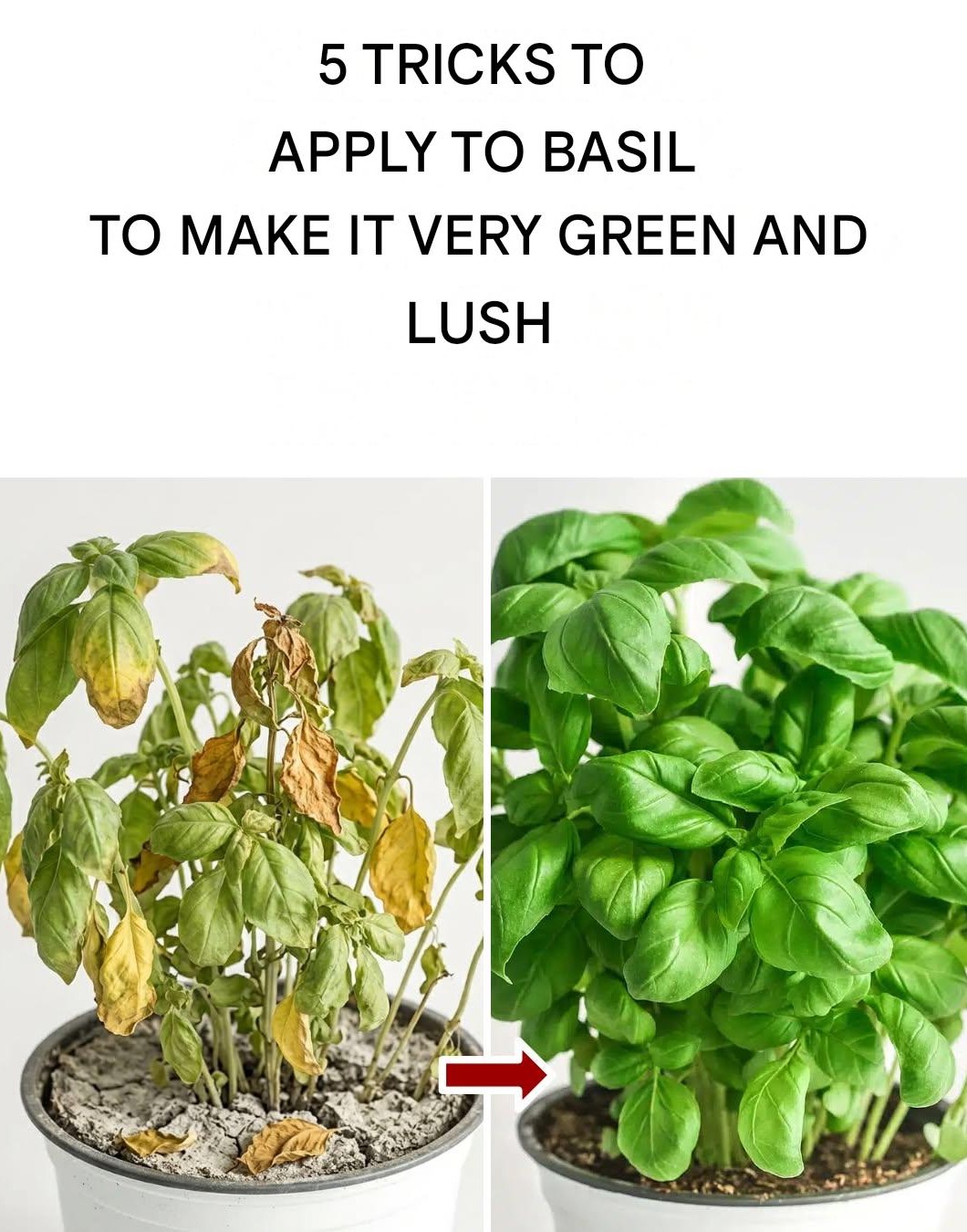
5 Simple Tricks to Grow a Lush, Fragrant, and Long-Lasting Basil Plant
Basil is one of the most popular and widely used aromatic herbs in home kitchens around the world. Its fresh fragrance, vibrant green leaves, and versatility make it a favorite ingredient in everything from salads and sauces to soups and pasta dishes.
While basil is relatively easy to grow, keeping it healthy, productive, and long-lasting requires a bit of care and attention. The good news is that a few simple techniques can make a significant difference in the appearance, flavor, and lifespan of your plant.
Whether you're growing basil in a garden, on a balcony, or on a sunny windowsill, these practical tips can help you enjoy a more abundant harvest throughout the growing season.
1. Choose the Right Location and Provide Plenty of Light
Basil thrives in bright, sunny conditions and performs best when it receives plenty of natural light each day.
Ideally, place your basil where it can receive at least 6 to 8 hours of direct sunlight daily.
Suitable locations include:
A south-facing window.
A sunny balcony.
A bright patio or garden bed.
Proper sunlight encourages strong growth, vibrant leaves, and a more intense aroma.
Plants grown in insufficient light may become leggy, weak, and less productive.
2. Use Well-Draining Soil and Water Carefully
The quality of the soil plays a major role in the health of your basil plant.
Choose a nutrient-rich, well-draining potting mix that allows excess water to escape easily.
Basil prefers consistently moist soil, but it does not tolerate waterlogged conditions.
Overwatering can increase the risk of root problems and may weaken the plant.
Check the soil regularly and water when the top layer begins to feel slightly dry.
Maintaining balanced moisture helps support healthy roots and steady growth.
Signs Your Basil Needs Water
Leaves may begin to droop slightly.
The soil feels dry when touched.
Growth may slow during hot weather if moisture levels are too low.
Many gardeners focus on sunlight and watering, but one simple habit can dramatically increase the number of leaves your basil produces throughout the season.