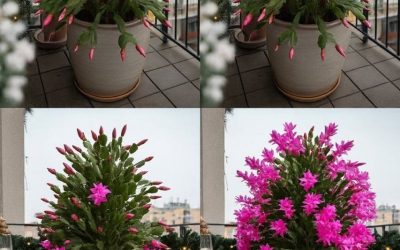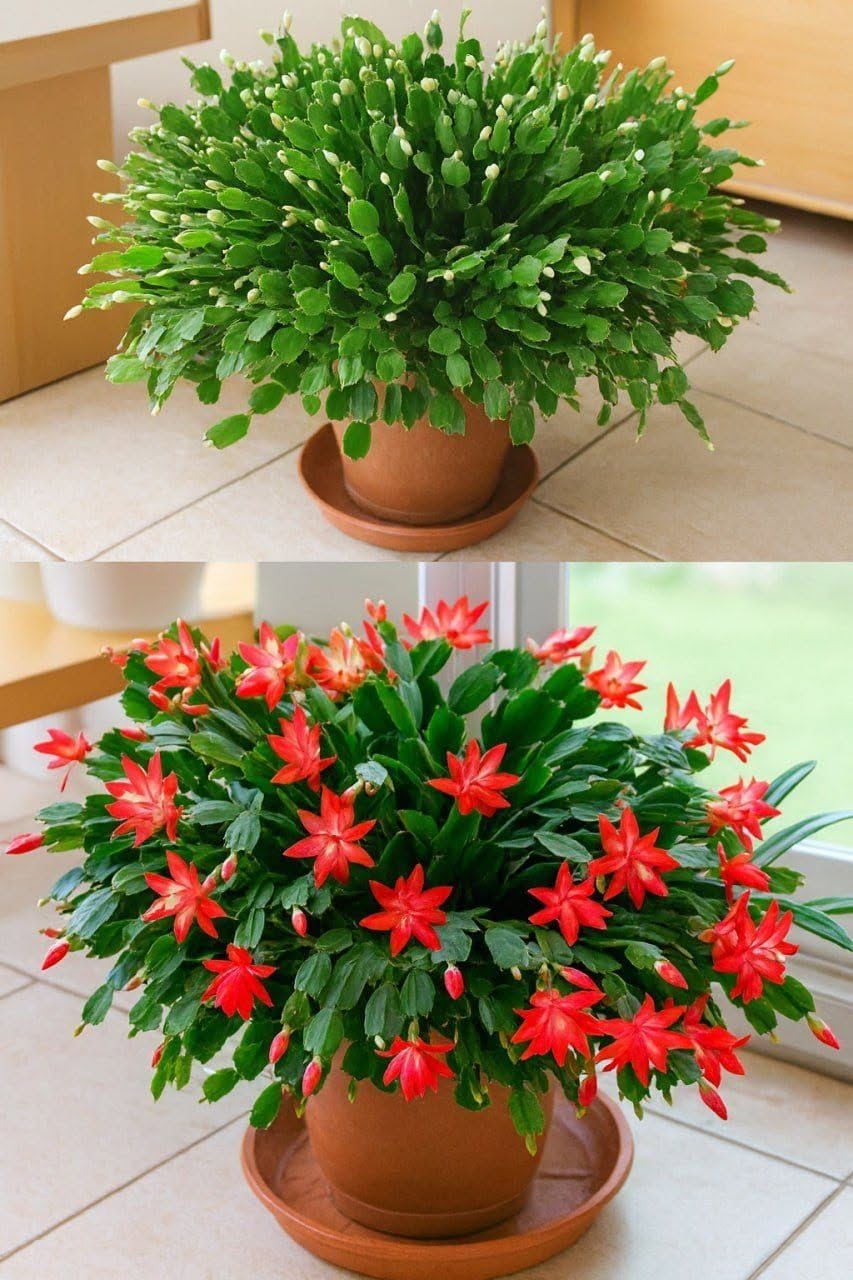
The Best Lighting Conditions
Christmas cacti enjoy bright but indirect light.
Direct, intense sunlight can damage the leaves, while rooms that are too dark may weaken the plant and reduce its blooming potential.
Ideal placement includes:
Near east-facing windows.
Bright rooms with filtered light.
Spaces away from strong afternoon sun.
Avoid Moving the Plant Too Much
Once buds begin forming, avoid frequently moving or rotating the cactus.
Christmas cacti can be surprisingly sensitive during this stage.
Sudden changes in light, temperature, humidity, or positioning may contribute to bud drop before flowers have a chance to open.
What to Do When Buds Appear
As soon as small flower buds become visible:
Resume regular watering.
Continue providing bright, indirect light.
Maintain stable temperatures.
If desired, you may continue using the cooled tea solution occasionally throughout the blooming season.
Common Reasons a Christmas Cactus Won’t Bloom
1. Too Much Light at Night
Artificial lighting can interfere with the plant’s natural flowering signals.
2. Warm Temperatures
Excess warmth may prevent the plant from entering its seasonal resting phase.
3. Overwatering
Constantly wet soil can stress roots and reduce overall plant health.
4. Moving the Plant Frequently
Frequent relocation may create unnecessary stress during bud development.
5. Lack of Seasonal Rest
Christmas cacti generally benefit from a cooler and slightly drier period before flowering begins.
Long-Term Care Tips
To keep your Christmas cactus healthy year after year:
Use well-draining soil.
Avoid waterlogged roots.
Provide indirect sunlight.
Fertilize lightly during the active growing season.
Prune lightly after flowering if needed.
The real magic of the Christmas cactus is not just its flowers—it’s the remarkable lifespan that allows some plants to become cherished family traditions for generations.